- Mark as New
- Bookmark
- Subscribe
- Mute
- Subscribe to RSS Feed
- Highlight
- Report Inappropriate Content
15-01-2017 08:11 PM - edited 15-01-2017 08:14 PM
Hi there,
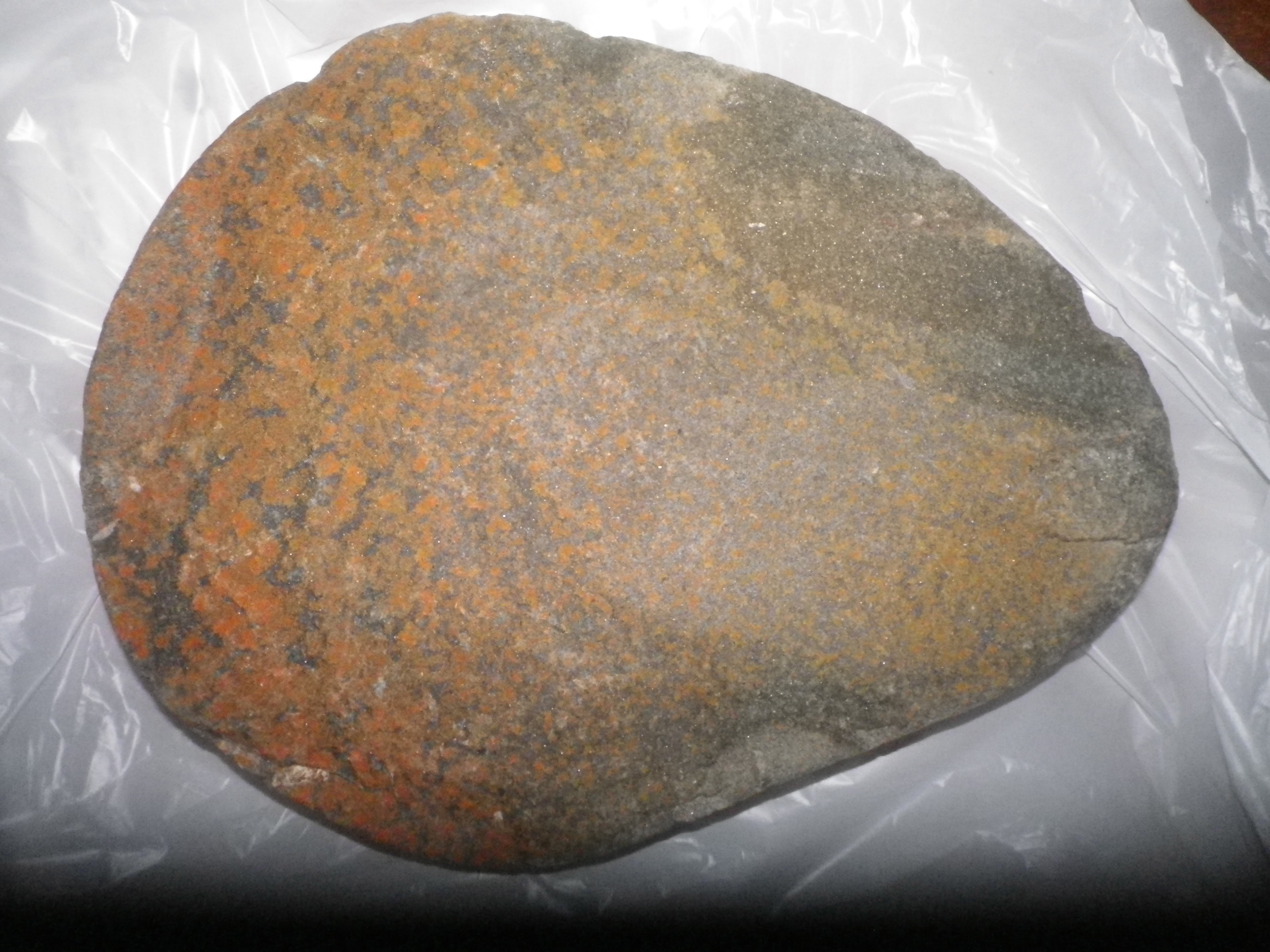
we've been left an estate which includes this rock. We're wondering if it is of Aborignal origin. My husband says it reminds him of concrete and not natural rock. It has a ridge all the way round and measures approx. 22cm X 16cm.
Thank you very much.
Best regards,
Debra.
Solved! Go to Solution.

- Mark as New
- Bookmark
- Subscribe
- Mute
- Subscribe to RSS Feed
- Highlight
- Report Inappropriate Content
on 16-01-2017 07:36 AM
I agree with your husband.
As the indent at the bottom right looks like it was accidently put there.
Perhaps if you try and scratch it with a sharp tool and if it breaks away easily then it's not a rock.
- Mark as New
- Bookmark
- Subscribe
- Mute
- Subscribe to RSS Feed
- Highlight
- Report Inappropriate Content
on 16-01-2017 11:13 PM
Thanks so much that's actually the underside of it. I tried to upload 2 other photos but it wouldn't allow me. My husband did scratch it and nothing happened, but he said still remonds him of concrete.
Thanks again,
Debra.
3BrNBBRz4UYdo+!~~60_7.JPG "chameleon54")

- Mark as New
- Bookmark
- Subscribe
- Mute
- Subscribe to RSS Feed
- Highlight
- Report Inappropriate Content
17-01-2017 07:44 AM - edited 17-01-2017 07:47 AM
It looks like an aboriginal axe head to me. It is the right shape and appears to have an edge all the way around. There are a couple of spots where the rock has chips broken from it. These have flaked away in shards as would be expected with an aboriginal stone tool. Cement tends to break in random clumps.
I have a couple of aboriginal axe heads made of similar material. As kids we used to visit aboriginal camping sites where the ground was littered with flakes of flint, chipped away as the aborigines made their tools around the camp fire. As a young farmer we would occasionaly turn up stone tools when cultivating the paddocks. I have a collection of around twenty stone tools now.
It needs to be remembered that Aborigines worked with the stone that was available to them, or that they could trade with neighbouring tribes. This was not always nice flint, but sometimes more of a fine granular type stone. The axes where first chiped into shape by hitting with another rock. If flint type material, they where left as chipped, but for the more granular sedimentry type stone. The rough cut axe head was then rubbed on another rock to shape it. Similar to a woodworker using sandpaper to shape a piece.
I would not be scratching it too much, as this would detract from its collectability and value. The axe heads are rarer than grinding stones and have a bit of value. I have seen them sell at auction for $50-$100. each, but this was many years ago. . There is a greater awareness now of aboriginal heretige than there used to be and there may now be restrictions on the sale of cultural items.
- Mark as New
- Bookmark
- Subscribe
- Mute
- Subscribe to RSS Feed
- Highlight
- Report Inappropriate Content
on 17-01-2017 08:11 AM
Just a couple more thoughts. Concrete usually has aggregate ( smaller stones ) mixed in with the sand and cement. The brown blotches on your rock appear to be lichen stain or difused granite type material, rather than defined edged stones as would be expected with concrete.
It is possible to make concrete with finer bulking agents such as cinders, but this concrete is even more crumbly and not as strong as normal concrete. I would not expect fine aggregate concrete ( or any concrete ) to break from the edges in shards as per your photo, but rather break in small random blobs. The only time you might achieve that effect with concrete is if the edges where broken while the concrete was still partially set, causing flakes of the wetted exterior coating, while the inside was still uncured. This would leave a more grainy feel to the exposed sections, rather than a hard shiny finish.
Although we are only working from one photo and cant handle to stone, my vote is definately for an aboriginal axe head.
- Mark as New
- Bookmark
- Subscribe
- Mute
- Subscribe to RSS Feed
- Highlight
- Report Inappropriate Content
on 17-01-2017 06:33 PM
- Mark as New
- Bookmark
- Subscribe
- Mute
- Subscribe to RSS Feed
- Highlight
- Report Inappropriate Content
on 17-01-2017 07:48 PM
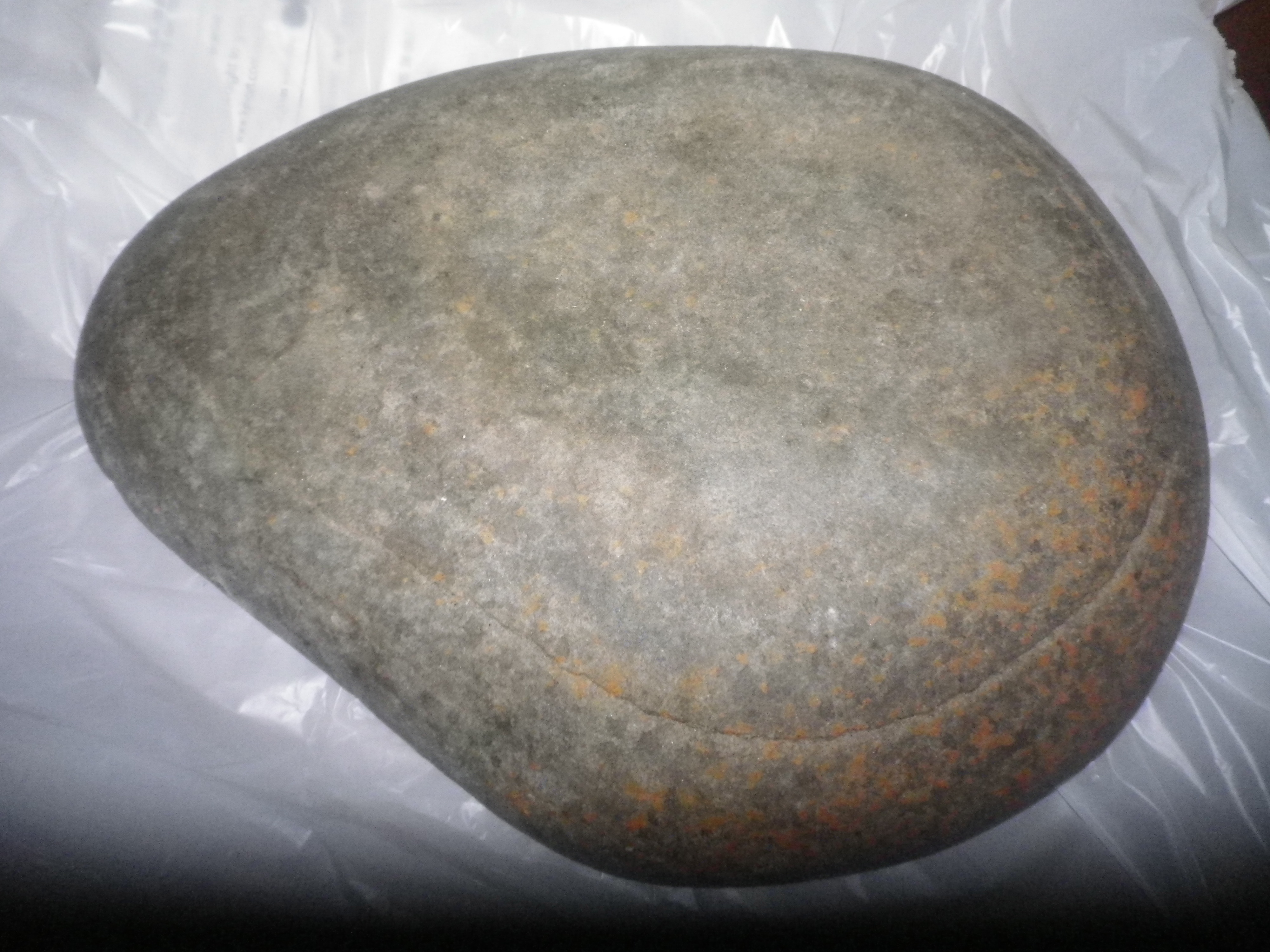
I've managed to download another photo showing the other side if thats more helpful to you.
Thanks again,
Debra.
- Mark as New
- Bookmark
- Subscribe
- Mute
- Subscribe to RSS Feed
- Highlight
- Report Inappropriate Content
on 17-01-2017 11:55 PM
No, sorry, that side doesnt look like an axe head does it. It doesnt look like a grinding stone either. They are usually small enough to fit in the hand, round on top, flat on the bottom. The base plates are quite large, but usually dished in the middle from wear.

- Mark as New
- Bookmark
- Subscribe
- Mute
- Subscribe to RSS Feed
- Highlight
- Report Inappropriate Content
on 18-01-2017 02:16 PM
Do you have access to a Museum that has a display of Aboriginal implements?
It might be helpful if you could let an expert have a look....at least they may be able to tell you one way or the other whether it has any cultural significance.
- Mark as New
- Bookmark
- Subscribe
- Mute
- Subscribe to RSS Feed
- Highlight
- Report Inappropriate Content
on 18-01-2017 08:59 PM
Yes thankyou very much I think thats probably what I'll have to do in the long run. Actually i have a nephew studying to be a Geologist so perhaps he could help.
Thanks again,
Debra.